Wednesday, 6 September 2017

Costume Analysis

To help me decided how I will style my actors/actresses when I create my music video, I decided to analyse existing styles throughout music videos.

Males:
When I decided to look at male artists within the indie genre, I quickly became aware that there are a lot more iconic male bands than solo artists. The first indie band I decided to look at was Arctic Monkeys. Arctic Monkeys had a consistent style in their costumes throughout four different music videos. The costumes were all black and consisted of a lot of leather. Also, the style was consistent with the 1950s style. You could also argue there is an intertextual reference to the 1978 film Grease as the costumes are almost identical. Due to using this iconic style, it appeals to audiences that prefer bands that are alternative to the modern pop groups. For example, the retro style appeals to audiences who prefer ‘old fashioned’ trends rather than keeping up with new trends.


When I analysed Oasis, I also looked at three different music videos. Throughout all of the videos, the costume was more varied however all followed a consistent style, although more unique. The lead singer (Liam Gallagher) consistently wore the same pair of retro glasses throughout every video and each shirt was of a similar style but the pattern on each one was different and bold. Oasis first became established in 1991 however, their style is not consistent with this era of style. Instead of this, they tried to keep their style old school whilst still having aspects of what would have been ‘modern day fashion’ at the time. This again is consistent with the indie genre as they are trying to challenge modern day trends and create a unique brand identity.


Females:
When I was trying to find iconic female indie artists, I realised that there are many more successful solo female artists than girl bands. Therefore, I decided to look at the costume and style of solo female artists. The first person I looked at was Lana Del Ray. Lana Del Ray had a consistent costume throughout four videos. In each video she wore very minimal makeup, instead she wore a red lip and cat flick eyeliner. In each video her skin was also made to be very pale and she was expressionless throughout the majority of the videos. However, you could argue that in one of the videos she was inspired by Marylyn Monroe in her style: her hair was styled in the same way with large hoop earrings and a pink lipstick. Also throughout all the videos (other the the Marylyn Monroe inspired one) she wore some sort of flower in her hair.


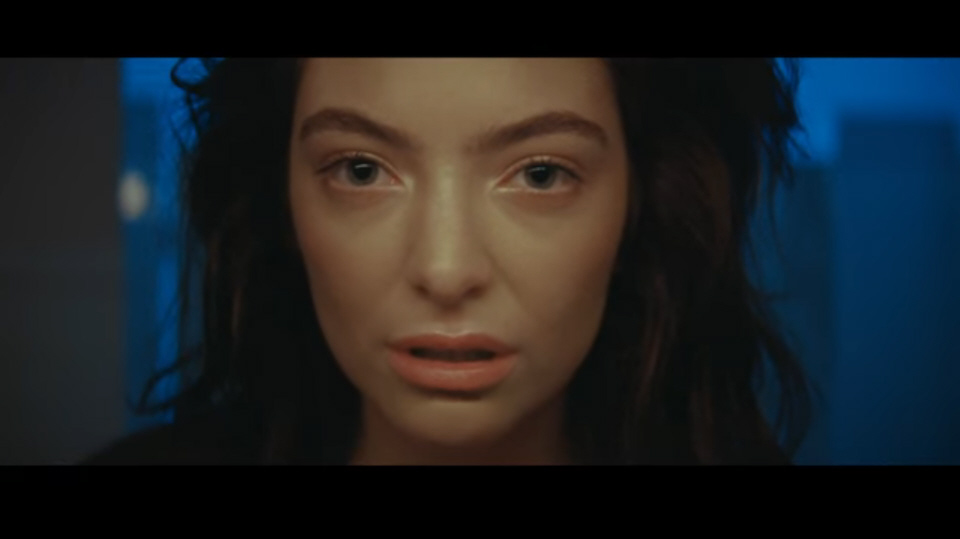
In the Lorde videos, the makeup was consistent with Lana Del Rays. She wore minimal makeup other than eyeliner and a different coloured bold lip in each video. Her hair in two of the videos was styled the same with big bold curls and in the other it was styles to create a futuristic effect which was made slightly creepy with the pale skin and no eyelashes.
Overall, in bot males and female costume, each artist has a unique and consistent style. This became a brand identity for each artist as each style and costume is so unique that audiences could recognise them instantly through just the costumes. The male artist’s costumes were all inspired by older eras of style. The females costume was less significant throughout their videos and instead their makeups was emphasised and their facial expressions were used to create the same effect.



How will this help me?
After researching different genders within the indie genre, I have realised I would prefer to create a music video for a female solo artist as it gives you more creative input through their makeup. I have also realised that certain parts of artist’s costume and makeup is vital to create a iconic brand identity for that particular artist.

Shot Type Analysis

To help me decide what shot types to use in my music video and to see what shot types are used frequently in music videos, I decided to analyse Lordes 'Royals'. This song is within the indie genre and Lorde also has a very unique brand identity and style so it is useful so see a different type of artist.


The first shot the audience sees in the music video is an establishing shot with symmetrical farming. The symmetry uses a road to separate clearly one side of a road from the other. This is assists with the high key lighting on the right hand side of the road and the low key on the left hand side. This instantly helps to foreshadow to the audience that the song will explore some form of segregation.


The camera then cuts to a head and shoulder shot of Lorde with a glaring facial expression at the camera. The head and shoulder shot helps to portray to the audience that the song they’re about to hear is personal to her and she’s giving you a close insight to her thought and emotions. Also, the fact the audience already think it will be concerning segregation, this represents Lorde as the commentator for social issues, conforming to Deborah Holdsteins theory.


When the camera cuts again, it shows a further establishing shot of a room using asymmetrical framing of the window and an unorganised bed. This framing can suggest disorder within the room. The use of the establishing shots so far can also be argued to be using houses and buildings as symbolism for different groups in society. The fact the room is bare using neutral colours also suggests that whoever lives here doesn’t have much. However, the high key lighting in the window can also suggest that the only thing they desire is freedom, something that isn’t materialistic.


When the camera cuts back to a head and shoulder shot of Lorde, the lyrics say ‘I cut my teeth on wedding rings in the movies’. The personal pronoun I again helps to reinforce the head and shoulder shot of how personal this topic is to Lorde. The phrase ‘I cut my teeth on wedding rings in the movies’ can continue the representation from the previous shot. It suggests that she doesn’t have much as she’s only ever seen a wedding ring in a movie. As the camera continues to cut between different shots of the house displaying further rooms that are bare, Lorde sings ‘and I’m not proud of my address, in a torn up town, no postcode envy’. This makes it clear to the audience that Lorde is now singing about a lower class lifestyle that she has experience herself. The fact she says ‘no postcode envy’ addresses the upper class as she is almost mocking them; traditionally a person’s wealth is determined by their postcode.


As the camera cuts to a long shot of the previous room this time with a male in it, the long shot continues to display the want for his freedom as he looks out of the window. Also, the fact that the lyrics say ‘but everybody’s like, gold teeth, grey goose, tripping in the bathroom’ continues to mock the upper class who want for these materialistic things as the long shot suggests the male is content with freedom. Also, as the camera cuts, the male is shown again with a silver chain around his neck again highlighting the social hierarchy Lorde has referenced as ‘Gold’ is more desirable than silver which she sang that everybody wanted. When the camera cuts again, a close up of the male’s body is shown with the silver chain again. This continues to suggest that he is okay with having less, emphasised by the empty background.


Overall, the shot types used in this music video are used to emphasise Lordes thoughts and emotions as she is the ‘story teller’ and the one delivering a moral message. Also, the shot types are used less to suggest things and instead are used to emphasise things within a frame which have representations themselves.


How has this helped me:
I have learnt that in my music video I will use different shot types to emphasise on different props/characters within the frame. Also, I have learnt that in this performance video, the shot types are typically close ups of the singers face. This is also consistent with previous videos I’ve watched.


Tuesday, 5 September 2017

Initial Idea

As a group we have decided that indie is the genre we are currently most interested in. This is because it is the genre of music we all listen to the most and after watching some music videos individually, we agree that we appeal to this aesthetic the most. Also, we feel like the codes and conventions of the genre are something we feel comfortable conforming to and challenging in a creative way.

Due to this decision, I will now be doing more real text research into the indie genre and indie artists in particular. This will help me and the rest of the group understand the codes and conventions of the genre and help us decided what we want to include in our music video.

Monday, 4 September 2017

Sven E Carlsson's Theory Analysis

Sven E Carlsson’s theory states that narratives are driven by binary opposition. He also states that there are two categories of music videos: contemporary and conceptual.

A performance clip is where the videos main focus is on the artist for example, following them dancing, singing, walking etc. There are three further types of performance videos: song performance, dance performance and instrumental performance. In each of these types of videos the following theories are commonly used.

Commercial exhibitionist:  In this clip of Nicole Sherzinger's 'Try With Me', Sherzinger is used as a commercial exhibitionist as she is used as the selling point of the music video as she is represented as something the audience will aspire to be. For example, the high key lighting throughout creates a flawless appearance on her skin which females especially desire. Also, the use of golds and whites throughout the video represents her as important and pure which people again aspire to be. Singers can utilise themselves as the commercial exhibitionist as existing fans look forward to seeing the artist themselves and it helps to promote the brand.


Another type of performance clip is the electronic shaman. The electronic shaman uses iconic alter egos to represent the artist or band. The alter ego usually has special powers or desirable qualities that are often supernatural. This reinforces the importance of the artist or band and again makes them desirable. For example, in ‘Get lucky’ by Daft Punk, Daft Punk are represented as the desirable characters amongst a universe of ‘ugly’ creatures. They also are represented as the heroes yet are robots and have futuristic costumes again suggesting they are more important than everyone else. The fact they look ‘cool’ makes them appear to be desirable which conforms to the electronic shaman theory.


Televised Bard: the televised bard theory means that the artist acts like a story teller and uses images on screen to anchor their story. The artist can either be part of the story or be the ‘narrator’ of the story inserting images to back up what they’re saying. For example, in Radiohead’s ‘Just’, Radiohead are the narrator of the story but don’t get involved in the narrative. Instead the narrative is visually emphasising their lyrics. Another example would be Rihanna’s ‘What’s my name?’ in which she is narrating a story but she is part of the narrative. A conceptal music video is where something else is shown throughout the video that illustrates the music. It has symbolism and displays the artists meaning. He categorises conceptual music videos into two main groups: narrative videos and artistic videos.


An example of an artistic video is seen in ‘Teardrop’ by Massive Attack.  The music video is very abstract with emerging shapes, to show a baby in a womb. The artist isn’t present and it is only their voice that anchor the visuals. The visuals switch between multiple shapes, and this compliments the music.  A variety of shots have been used such as extreme close ups followed by emerging darkness. There are visual binary oppositions throughout such as high key then low key tone. There are also conceptual binary oppositions throughout such as life (developing baby) and death (all black screen symbolising death). There is visual narrative instead the visuals are symbols and representations.


An example of a narrative clip would be Ed Sheeran's ‘The A Team’. The music video has connotations of an old fashioned silent movie but has a musical background which describes the ‘movie’ which makes it a narrative clip. The story is easy to follow and contains no lip-synchronisation. The narrative in this video is about a women who's life is troubled and she sells love to men for money for drugs. The video is in mainly low key fitting the upsetting storyline.


How has this helped me?
After analysing the different types of music videos, this has helped me as I now have a better understanding of what type of music video conforms to the codes and conventions of the indie genre. For example, out of the videos I analysed, the music video that conforms to the indie genre the most would be: the narrative video, the artistic video and the commercial exhibitionist video. This is because the indie genre appeals to audiences who enjoy abstract aspects of the genre (artistic). This also allows the producers to have more creative freedom and to challenge the codes and conventions of music videos. Also, the performance and narrative videos would be suitable as it allows us to feature the artist we will create within the video. This allows us to develop their brand image/identity.

Sunday, 3 September 2017

Goodwin's Theory Analysis

To help me understand how Goodwin’s theory is applied to music videos, I decided to do real text research into how the aspects are integrated. Goodwin’s theory suggests there are seven key aspects within music videos. These are:

There are often intertextual references to other media texts.
This is often seen within Lana Del Rey’s music videos. She often refers to other famous people/significant figures in history or historic events. This is seen in ‘Young and Beautiful’ inn which Lana represents herself as Marylyn Monroe. This is done through use of costume as she was often seen wearing white. Also the red lipstick and iconic hairstyle Lana is wearing again conforms to Monroe’s iconic style. Not only this but the filter used to make the screen narrower and to appear of a more vintage quality, makes the viewer feel like they are watching something from the 1950s; when Monroe was alive. Practicing this theory is beneficial to an artist as it allows them to target pre-existing target audiences. For example, Marylyn Monroe’s target audience are more likely to watch this video, creating a mass audience for Lana Del Ray.


Voyeurism often is a major aspect of a music video, especially in relation to females.
This is more common within the R&B and pop genres. This can be seen in Rhianna’s ‘stay’. For example, throughout the video, there are two characters however the majority of the camera time is focussed on the female. Also, when Rhianna is undressing, slow motion is used to emphasise the act which can have sexual connotation. There are also a series of close-ups or her body which also have sexual connotations eg. Her neck and lips. However, this is not the case for the male. This can be beneficial to an artist as it makes them seem desirable to an audience. Also, because they are seen as ‘stars’, the audience aspire to be like them and the artist becomes a role model. However, in male artist’s videos, females are often still sexualised for the benefit of the male artist. Stereotypically, females are seen to be ‘chasing’ the male characters and the sexualised women are seen through point of view shots of the male characters. It allows the male artist to display and conform to ‘lad’ behaviour, so again their male audience aspire to be like them. It also creates pleasure for the male audience.


There are characteristics that artists portray through consistent iconography and style throughout their videos.

An example of this would be Amy Winehouse; throughout all the music videos, the iconography is consistent.  For example, the iconography of the consistent makeup and styling of Winehouse is the same creating a unique and iconic style that is recognisable instantly to her brand identity. Also, the dark tones she creates throughout the music videos is also consistent. This is done by using low key lighting and multiple close ups to create shadows across her face. This creates a dark theme and makes Winehouse seem more ‘damaged’ and mysterious. The enigma codes creates through this create intrigue from her audience into her life. This also makes her instantly recognisable and means her brand identity becomes widely known.  


The star character (protagonist) is shown through lots of camera movements, shots and angles etc. to give them more camera time making them the centre of attention

An example of this would be in Arctic Monkey’s ‘R U mine?’. Throughout the whole music video, the artists are the only people featured. They are shown through a variety of shots and take up the vast majority of the camera time. This would appeal to their target audience as avid fans want to see them and invest in their lifestyle. This type of music video maximises this. 


There is a performance that supports the narrative of the song.
This aspect of the theory is typically more prominent within pop videos. There is usually a dance routine accompanying the narrative which often doesn’t relate to the narrative. Instead, in pop videos, the performances used to make the artist the commercial exhibitionist to appeal to their fans whose main appeal is the artist themselves. However, in indie music videos, the performance is typically a narrative that also features the artist themselves, but the focus is more on the narrative as opposed to them. This is because indie music videos often feature symbolic and semiotic meanings to appeal to psychographics of enjoying finding hidden meanings. This can be seen in Hozier’s ‘Someone New’.Throughout the music video, the performance is a mixture of live performance and narrative performance intercut into each other. The narrative of the song is about Hozier’s opinions on falling in love. He says ‘there is no right way’ and that he ‘falls in love everyday with someone new’. He addresses the song to someone who fell in love with him but he warned her that ‘she knew who he was’ and that he isn’t the type of person to stay with one person. Therefore, the narrative performance throughout the video is of the female he addresses, showing the behaviour the narrative explains. She is shown through a series of quick cuts to be in intimate situations with numerous people. This allows the narrative to be explained in more detail.


The consistencies between the sound and the visuals helps to create a relationship between the two.
An example of this would be when cuts are accompanied by a beat. This can help to emphasise certain aspects of the audio or the visuals. It builds tension and create drama when leading up to the climax. This is often more frequent closer to the main chorus; the instruments used are more layered and become louder/faster. This can be seen in The Arctic Monkeys 'Snap Out of It'. When the song begins, a dominant drum beat is introduced before the lyrics begin. This helps to establish a strong presence and create a dark tone. This also conforms to the Arctic Monkeys brand identity as they are consistently represented as strong and rebellious male characters and this conforms to this as it sound intimidating. Throughout the video, there is also a strong drum beat which is used to emphasise the cuts surrounding the female in the narrative. She is represented as ‘crazy’ and ‘emotional’ conforming to the female stereotypes. The series of cuts is emphasising by the drum beat to make her seem unstable and all over the place. There is also a piano introduced in some parts of the music video. This is used to help emphasise that she is ‘hypnotised’ as explained by the lyrics. The piano helps to create a different tone to the rest of the video, suggesting she is different and away from the normal. It creates a disorientating effect to the listener.  This appeals to the Arctie Monkeys target audience as the males are represented as being normal and the desired gender which would appeal to the male audience who enjoy the idea of being dominant.


There is a relationship between the lyrics and visual aspects of the video.
Similar to the performance theory, the lyrics also help to explain the narrative within the music video; they narrate the events. An example of this would be in the Lumineers ‘Sleep on The Floor’. At the start of the music video, there is a minute of narrative unaccompanied by lyrics. The narrative uses establishing shots to introduce two characters that appear to be unhappy through the use of facial expressions. When the lyrics begin, they begin to narrate the story of the couple moving away. The lyrics say ‘pack your favourite blouse’.  This is accompanied by a two person long shot of the two characters buying tops from a shop. The lyrics continue to say ‘if we don’t leave this town’ as an over the shoulder shot shows the two characters in a car with a clear sky and open road in the background to suggest they are leaving. This can appeal to audience who have psychographics of simple narratives as the events are explained to them; there is little symbolic meaning throughout. 


How can this help me?
This research into Goodwin's theory has helped me understand that there are consistencies throughout music videos. It has also helped me begin to understand the generic codes and conventions which will allow me to challenge and conform to them when I decide what genre and music video I want to produce.

Friday, 1 September 2017

Deborah Holstein's Theory

Deborah Holstein’s theory focuses on three aspects:
1. The star of a music video is represented as a fantasy.
2. The star is represented as being a political commentator.
3. The star is perceived to be a mediator during harsh times of social conflict.

To help me explore this theory, I will analyse James Bay's 'Best Fake Smile'.

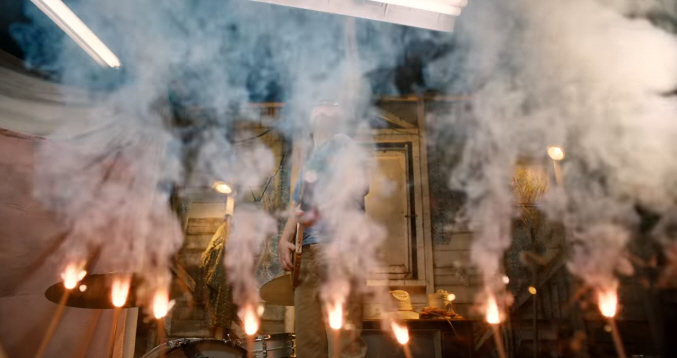
1) Throughout the video, Bay is represented as ‘fantasy’. This can be seen through the use of the guitar as a prop. For example, throughout the video, Goodwin’s theory is used (the visuals have a relationship with the audio) as the diegetic sound of the guitar is emphasised through Bay over dramatically playing it. This can represent him as fantasy as it highlights how talented Bay is at playing the guitar and makes his talent seem desirable and something to look up to. Furthermore, he is shown to be fantasy through the use of location. Bay is playing with his band in his garage. The fact the character of a young boy is used who wants to be like Bay, can conform to the typical dream of young males who have psychographics of being interested in music. This situation would be appealing to any musician who wishes to start their own band and this therefore makes Bay seem like a fantasy as it’s something people want, but typically don’t have. Furthermore, the use of high key lights, glitter and a glitter ball help to to create a sense of excitement and thrill (backed up by a series of high speed cuts) again helps to make this situation seem out of the ordinary but something that could be fantasised about.


2)  Bay is represented as a political commentator through his lyrics. Bay sings about not having to ‘wear your best fake smile’ throughout the song. This can create the social message that it is ‘okay to not be okay’. The verb ‘wear’ when speaking about a ‘fake smile’ again suggests that it shouldn’t be a costume that you have to wear to hide your real feelings; you should speak about your emotions. Furthermore, the fact he is a male saying this, challenged male stereotypes that they are emotionless, as he is encouraging other males to speak out about their feelings and emotions. This can relate to mental health issues which, at the time of the songs release (March 2016), was a common feature in controversial news articles. He also says ‘you don’t have to’ do things ‘if you don’t like it’ again, creating the message to the listener that their happiness and instinct are the most important thing.


3)  Bay is represented as a mediator throughout the video through the relationship he is seen to create with the young male character. He is represented as a role model (through the use of low angle shots, appearing to make him an authority figure) who is trying to help the young boy do what he wants to do and show his emotions, as shown through his lyrics. The boy is seen to be sad and angry, through the use of facial expressions, until he enters the garage with Bay. Here, Bay is shown to be singing to the boy, through a long shot, which encourages the boy to join in with the band. Furthermore, the juxtaposition of head and shoulder shots in the beginning of the video around the boy, to the close ups at the end, can help to connote how he is more open with his feelings. This shows Bay as the mediator as it suggests to the audience that if you follow his advice, there will be a positive outcome.


How will this help me?
After analysing Holstein’s theory, it has helped me understand the three main ways in which an artist is represented in their own music videos. For example, similar to Goodwin’s theory, there is always a link between visuals, lyrics and sounds that helps to represent the artist in a consistent way. I believe that this theory in particular is relevant to the indie genre as typically, indie artists discuss current controversial and sensitive topics. This allows them to become the mediator and commentator within the situation they are discussing.