Tuesday, 19 December 2017

Live To Narrative Performance Split

To help me understand what the average ratio of live performance to narrative performance is within indie music videos, I decided to analyse Lorde’s ‘Royals’. This will help me as she is the inspiration for our own artists and as the song we have chosen only has live performance, we can get guidance from this video instead.

The first ten seconds of the music video is ‘narrative performance’ with the camera showing an establishing shot of the location. This is key to the lyrics of the song (conforming to Goodwin’s theory that the visuals and lyrics have a connection). The is then followed by CGI, added in post-production, of a black screen with the words ‘LORDE Royals’. After this, the camera cuts, on the beat, to the ‘live performance’ of Lorde for two seconds however, lip syncing isn’t utilised. Instead Lorde is established by staring into the camera. It then cuts back to ‘narrative performance’, continuing to establish the location for three seconds. It is here when the camera cuts back to ‘live performance’ for three seconds.


This continues through the rest of the video. However, there is a trend. At the beginning of the video, the live performance is more even in ratio with the narrative performance. For example, for around the first minute, the split of narrative performance to live performance is 40:32 seconds. This allows the audience to become established with the location and characters as well as the artist.
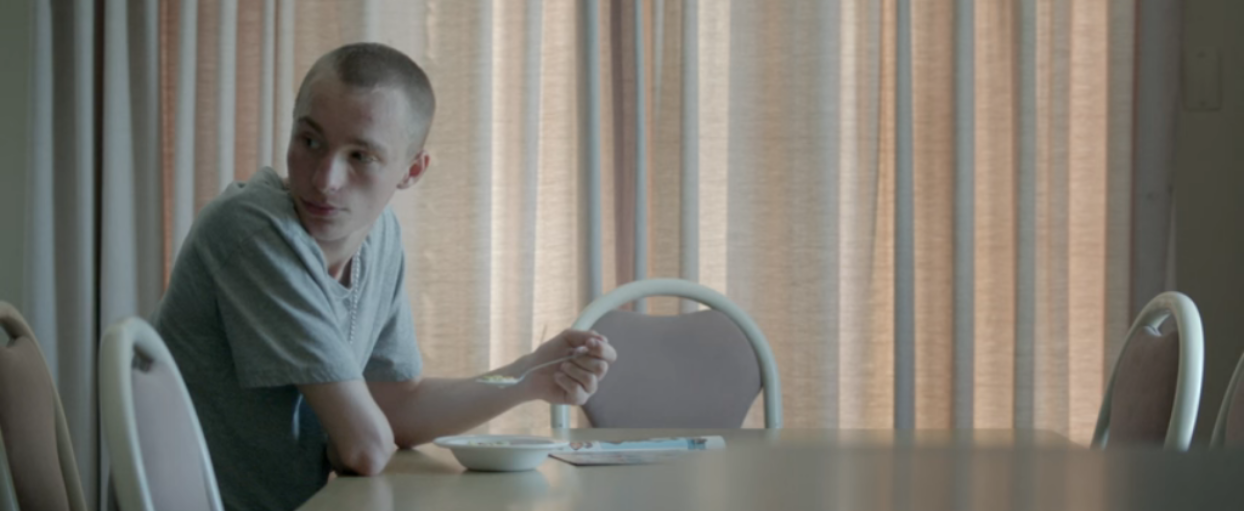
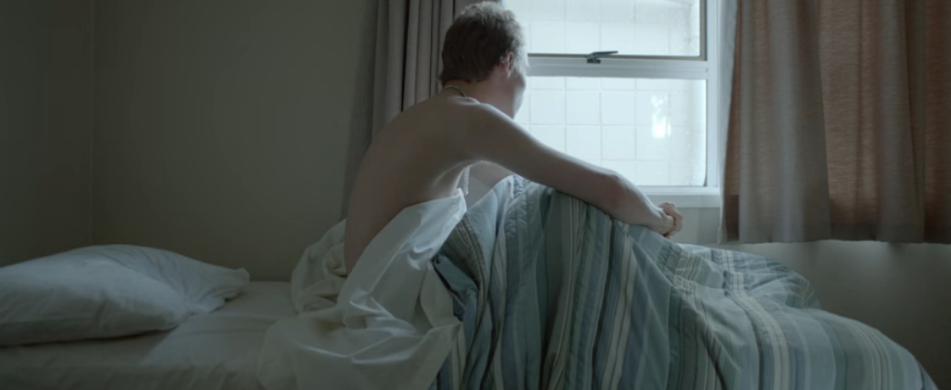


However, in the middle of the song/music video, the narrative performance becomes much more frequent with the second minute of the narrative having a narrative to live performance split of 34:20 seconds. This is because as the song progresses, this is the moment where the narrative progresses at its greatest rate so the audience see more visuals to relate the story to the lyrics.

In the last minute, the narrative to live performance split changes again to 32:38 seconds. This is the only section of the music video where the amount of live performance exceeds the narrative performance. However, there is one consistent live performance clip within this section that extends over 27 seconds alone. In this moment there is a diminuendo, and the tempo slows down. Therefore, the artist is featured more in the live performance at this part as it is almost the rawest part of the song, allowing the opportunity for the audience to relate more to her. The visuals have been used to achieve this.


Overall in the music video there Is approximately a 116:85 second ratio of narrative to live performance. This tells me that the visuals are what drives the song in conjunction with the lyrics and audio (Goodwin’s theory).

How has this helped me?
As Lorde is the artist we have taken inspiration from, I now know that to conform to the codes and conventions of indie music videos, we should include more of the narrative performance within our music video that the live performance. However, I also realise that the split shouldn’t be consistent throughout the video eg. 4 seconds narrative intercut between every 4 seconds live performance. Instead, the split should be used to help create a deeper relationship with the audience and artist at certain points. This therefore creates a deeper meaning which is a code of the indie genre and the psychographics of our target audience we are trying to appeal to.

Monday, 18 December 2017

Homosexuality Themes Analysis

To help me understand what themes are used around homosexuality within our music video, I decided to analyse some music videos that include homosexuality within them (within the indie genre). This will allow me to Recognise any reoccurrences.

After analysing Hayley Kiyoko’s ‘Cliff Edge’, ‘Girls like girls’ and Garden City Movement’s ‘Move On’, it became obvious there was a reoccurring colour scheme. Throughout all the videos they featured a pink colour palette at some point. This has connotations of femininity which conform t the fact the relationship is between two females. However, it also suggests it is natural as baby pink connotes babies. This could also be perceived to have the representational issue that it suggests the homosexual couple are uneducated and naive.


However, in the music videos there is also another colour pallet that is prominent throughout. To create binary opposition, the colour palette of blue is used. This contrasts the feminine and masculine connotations. This can also create the binary opposition of boys vs girls due to the homosexual theme. Also, this is an issue as it symbolises segregation between females and males, or this could be perceived to be segregation of homosexual couples. 


Homosexual characters:
After looking at the characters used in homosexual music videos, it became apparent that it is only gay and lesbian characters that are portrayed. Also, there is more frequent coverage of lesbian couples than gay couples. This could be due to the male gaze theory around lesbian couples and that females also relate more to females. There is a lack of bisexual characters within the music videos, instead, the characters are connoted to be hiding their feelings and eventually overcoming the fear of showing their sexuality. 


How has this helped me?

How has this helped me?
As we are planning to sue a colour palette within our music video, the consistent colour palette within music videos that include homosexuality has made it clearer which colour scheme we should use. For example, blue and pink would be good to use surrounding the character’s desires and personalities. We could use a pink colour palate for the artist as she ‘l artist (pink) as she ‘likes girls’ and is female herself, a blue colour palette around the male as he is heterosexual so to conform to the stereotypes would be to represent him as ‘manly’, and we could use a purple colour pallet around the bisexual character to show her desire for both boys (blue) and girls (pink). 
Also, in terms of the types of characters used, we will be challenging the typical characters used in indie homosexual music videos as we will be including a bisexual character which hasn’t been featured as frequently. Although we are conforming to the codes and convention by having there be a lesbian couple in the beginning, the male is introduced to the main plot as opposed to the sub plot like in other videos. 

Friday, 15 December 2017

Artist Name Decision

After deciding we wanted to include the theory of ‘the red thread of fate’ in our narrative and conducting research into it, we decided to start thinking about the name of our artist.

When we looked at the artists we had analysed that are also female indie singers, we realised there were some correlations. For example, most of the artists we had looked at have one word or two word names; Lorde, Birdy, Amy Winehouse and Adele. Also, the two artists we focused on the most (Lana Del Rey and Lorde) both had names beginning with ‘L’. Therefore, considering our inspiration and the original song is sung by Lorde, we decided to try and come up with a single name beginning with 'L'.


When we were looking into name options, we decided to have a look at ‘the red thread of fate’ theory again as this will be an important symbolic code within our narrative. This will be important as the indie target audience enjoy complex narratives in which they make inferences for themselves. When we looked at the theory again we found out that the name of the God in charge of the ‘red thread of fate’ is believed to be ‘the old matchmaker God; Lunar’. This god is also in charge of marriages.
As a group, we decided we liked the name ‘lunar’ as it has may links to the codes and conventions of the indie genre as well as to the artist we have chosen and in particular, the song.


For example, the song we have chosen: ‘Sober’ has connotation of being ‘high’. ‘Lunar’ means ‘resembling the moon’ of which can also be used as a symbol of physically being ‘high’. Not only this, but Lorde previously has used a theme of supernatural within her style and music videos, which again can be associated with the moon.


Also, because there is a link between the name ‘Lunar’ and the theory we will incorporate into our narrative, the target audience who have psychographics of enjoying complex narratives and things with deeper meaning (Barthes’ theory) will enjoy making the link between the two. This will give them the psychological reward of knowing they discovered it for themselves.


However, after looking at the name ‘Lunar’ we decided that it wasn’t a word that would leave an instant impact on someone who had seen it. Therefore, we decided to look into different ways we could spell it. In the end we decided on ‘Lüna’. This way of spelling it appear to be more unique and conforms to the indie genre more through it being different.

Tuesday, 12 December 2017

Lorde Sober Live Performance Analysis

To help me understand how to construct an effective live performance, I decided to analyse the live cover performance of Lorde 'Sober'- our chosen song. This will help me decide which themes will be appropriate to recreate and what tones I want to create. 


Makeup and Costume:
In the music video, Lorde is wearing the costume of a white dress. The white dress contrasts the low key lighting creating binary opposition of light v dark which conforms to Levi Straus’ theory. The fact she is also represented as being ‘light’ creates the connotation that she is pure and good. This can also have symbolic meaning of her being represented as an ‘angel’ and she is being trapped by the darkness.  This can also conform to Deborah Holdsteins theory that the artists are always used as political mediators and messengers as angels are often seen as messengers. This allows the audience to connect with her as she is seen as a symbol of peace and a ‘mother figure’ to guide them in times of need. The natural makeup (from what the audience can see due to the lighting) again adds to the innocence and purity theme. Overall the makeup and costume conforms to Lordes brand identity as she can again be perceived to be almost ‘supernatural’ and very eccentric. She is challenging the stereotypical costume of indie videos.


Props:
The only prop used throughout the video are candles. There are multiple candles from the establishing shot to the final shot. The candles have the symbolic connotations of hope, light and purity again. This can also be linked with the semiotic codes of the lyrics which suggest she is trapped with something or someone ‘tying yourself to me’. The candle is seen as being the light in the darkness that consumes the majority of each frame throughout the video. It is also significant of the close up of the close up of Lordes face silhouetted in the foreground of the frame with shallow focus showing the candles in the background. This can suggest that Lorde is the one preventing herself from ‘reaching the light in the darkness’ as the is creating a physical barrier towards the light. This is consistent with the lyrics as throughout she talks of a conflict between loving something/someone and knowing it isn’t right for her. The also creates the enigma code that the rest of the lyrics will discuss her trying to overcome this obstacle.
The use of the instruments shown throughout the video conforms to the codes and conventions of live performances. This can show how raw and sincere Lorde is being and can increase the audiences respect for her as a singer as they believe that they are witnessing her talent first hand.


Miss en scene:
The setting of a church has been used. This is connoted by the candles, having religious connotations and the arches and pillars. This creates the tone that Lorde is having a conflict. This is backed up by the binary opposition, her being a physical block for the light and her being represented as an angel (all previously discussed). Therefore, the whole song can be seen as being her ‘confession’ and begging for help as she is trying to explain her internal conflict. This also creates a positive ideology that it is okay to ask for help. Also when her audience see her opening up, the can relate and therefore feel they can do the same.


Camera movements:
Throughout the video, a lot of close ups are used on Lorde. This can create a physically closeness of the audience and Lorde which can suggest how intimate this moment is for her; her emotions and thoughts are genuine. This can also help the audience create a relationship with Lorde as they believe she trusts them and is comfortable with them. There are also a lot of close ups used of the instruments being played, which again, conforms to the codes and conventions of live performances. This conforms to Goodwin’s theory that there is a relationship between the visuals and sound, as the relevant instrument is shown as it is heard. This helps to emphasise certain sound effects to make it seem more dramatic and dimensional which the indie genre would enjoy.
Many of the shots are hand held shots. This creates a sense to the viewer that they are in the room watching Lorde and it is a viewpoint of someone in the room. This allows them to feel closer to Lorde and empathise with her more.


Overall, the majority of the shots show Lorde which conforms to Dyers Star Theory which suggests the majority of music videos show mainly the artist as it allows them to develop their brand identity and gain credit through recognition of their image. 

How has this helped me?
After watching the live performance of the song we have chosen to create a music video for, I now have a better understanding of what is included in a live performance. As our research suggested, our target audience enjoy a mixture of live performance and narrative in a music video, we will have to recreate something similar to this. After watching this video, I am again made aware that the artist has to be represented in consistency with their brand image. Also, that the lighting, tone and miss en scene should have a relationship with the tone etc of the lyrics, conforming majorly to Goodwin's Star Theory. 

Tuesday, 5 December 2017

Lip Sync Analysis

Throughout my music video, I plan to incorporate both live performance and a narrative performance, of which I will intercut into each other. As I want to include a live performance and I plan to use the cover or Lorde’s song as the audio, the actress/actor I decide to use will have to lip sync to the song. Therefore, I decided to analyse lip syncing in Lorde’s existing music videos.


Throughout Lorde’s ‘Green Light’, the live performance and narrative performance is intercut throughout. In the live performance, Lorde is shown, through close ups, to be singing directly into the camera. However, because the audio was added in post-production, lip syncing must have been utilised during the filming stage. Lorde appears to be singing the song diegetically as the lip syncing is accurate. To make it appear that she is singing diegetically, the lip syncing is in perfect time to the audio. Also, the fact she is ‘singing’ directly into the camera can distract the audience’s attention from her mouth as the intense glare at the camera deviates their attention to her eyes. The fact Lorde’s head doesn’t stay still and she instead looks around can also help to disguise any slight mistakes made within the lip syncing as the movement detracts from that.


How will this help me?
I now know that when filming my own live performance, to create a successful lip sync, the actor/actress I feature will have to learn the lyrics effectively in order for the lip-sync to be accurate. Also, to help me disguise any potential slight mistakes, I should ensure there is movement within the frame or another key feature which can deviate the audience focus. I could also ensure I record many takes of the song so I can select the most accurate clip and use that one. Or I could ensure I film different verses or choruses in different takes so the actor/actress can focus on a smaller part of the lyrics so there is a higher chance the lip syncing of every verse/chorus will be accurate.

Thursday, 30 November 2017

Red Thread Of Fate

After analysing the lyrics of 'Sober', I have started to think of symbols I can use throughout my music video, to help represent the plot events within my narrative. Considering the lyrics discuss a relationship that is failing, I decided to explore something that could represent this.


After completing the group discussion we decided that we wanted to include the theory of 'the red thread of fate'. This is relating to a Chinese myth as they believe that the gods tie an invisible red cord around the ankles of those that are destined to meet one another in a certain situation or help each other in a certain way. According to Chinese legend the God in charge of "the red thread" the ‘old lunar matchmaker’ god. Throughout a lot of Chinese media, and recently in some English media, the red thread of fate has been used top represent a relationship between couples. This has been adapted as the red string is attached to two people’s fingers. It creates a physical connection between them and shows they are destined to be together.


 We would like to feature it within our music video because it conforms to Barthes' theory that audiences appeal to things that have symbolic meaning. This is because within the lyrics Lorde says ‘every ribbon you use to tie yourself to me’ which shows similarities to the myth. In this case, the thread would be symbolism for two things throughout the music video as when I analysed the lyrics, I realised there was a double meaning:


Her relationship with someone:
Throughout the song, Lorde uses repeated personal pronouns to create the sense the song is almost something she has written specifically for someone. However, in the beginning of the lyrics, Lorde describes a relationship that is struggling but there is still hope. She says ‘but my hips have missed your hips’ and she calls them both ‘king and queen of the weekend’. This metaphor implies that they are still strong and relying on each other. This is juxtaposed to the lyrics at the end of the song. She sings ‘midnight, we’re fading’, ‘we know that its over’.


This shows the clear difference between a relationship that was spoken about with hope at the beginning compared to the relationship that is defined as ‘over’ in the end. Also, the difference of the pronouns ‘you’ at the beginning and ‘our and ‘we’ at the end, can again show a change in the relationship. It shows that at the beginning Lorde mainly focused on ‘you’ (whom the listener assumes is a male) seeing them as above her, as a form of guidance. At the end, the change in lexical choices shows the listener that she sees them as equal now and doesn’t have to rely on them anymore.

                                                   
                                                      Drugs and alcohol:
This is similar for her relationship with drugs and alcohol that is connoted throughout the lyrics; ‘kicks’, ‘a pill that could touch our rush’ and the title of the song ‘sober’. The song could be interpreted to tell a story of drug and alcohol abuse that eventually ends with lyrics that could have connotations of overdosing.

Therefore, the thread in both cases can symbolise something breaking; either the ending of a relationship or the end of life. The thread could be a symbol throughout the video for both of these situations by being strong and intact as the beginning of the narrative and becoming continuously more frayed and damaged throughout until it breaks at the end. This can also conform to Todorov’s narrative theory, to help represent the progression through the order disorder order.

Monday, 27 November 2017

Colour Palette Analysis

Within my music video that I will create, I would like to include a colour palette throughout. This is because it allows me to create moods and tones subtly, appealing to the indie genre audience who enjoy complex narratives and deeper meanings. Also, it allows me to use connotations of colours to help show progression of feelings throughout the video, backing up the lyrics. To help me see how colour palettes are included in narratives, I have decided to analyse Halseys 'Colours'.

Throughout ‘Colours’, the colour palate is used as representation for a relationship. This conforms to Barthes’ theory that there is symbolic meaning within music videos. 

In the establishing shot of the music video, Halsey is shown through a low angle long shot to be stood holding the prop of a polaroid camera. Within the shot, the colour palette has been chosen to be white and high key. This is consistent with her costume and in the next shot, shown through a cut. The white can be used to connote innocence and purity. The fact that when the male character (the princess in terms of props character theory, challenging gender roles) is shown to be wearing a white costume is significant. The fact she initially was surrounded by white and is seen to be watching the male who is also wearing white, suggests it is his she wishes to surround herself with. However, the lyrics at this stage don’t suggest anything to the viewer in terms of there being a romantic connection, so the white can also be suggesting neutral ground/emotions. 


 Although the colour palette throughout the beginning of the music video continues to be white, blue begins to be incorporated gradually. This is in relation to the lyrics as she sings ‘and it's blue’. The fact the blue is becoming more prominent within the frame can show that the focus of the singer is becoming the male character and is taking over the neutral feelings she had towards him in the beginning. The blue becomes the representation of Halsey herself.  This also conforms to Goodwin’s theory that there is a relationship between the visuals and lyrics. 


As well as the blue and white colour palette there is also a grey colour palette introduced through the use of a filter. Although this was used the whole way through the video, the filter becomes more noticeable when Halsey begins to sing ‘everything is grey’. This is because the props and other colours within the frame have been specifically chosen so they don’t contrast the grey tones as much. This makes everything appear darker. For example, in the head and shoulder shot of Halsey ,again holding the polaroid, the low key lighting, the use of a black background and Halsey taking up a small proportion of the frame all creates dark tone making the grey filter more prominent. The use of the grey has symbolic meaning of clouded vision or an unclear area. This can suggest that Halsey doesn’t understand her feelings for the male or if she isn’t sure if the feelings are reciprocated or not. This could also be a reflection of the viewer’s thoughts towards the narrative.


As the narrative progresses and the blue continues to become more prominent in the frame, the lyrics again create a relationship with the visuals. As Halsey begins to sing ‘you were red’. The colour palette begins to change again to create a more lilac tone. This can represent her creating a connection and fusing with the male character she described as ‘red’. When you mix red and blue you create purple. However, the fact the red is never seen within the narrative can suggest the selfish emotions she is having. This is consistent with the narrative twist that takes place in the very end of the video when the audience are shown that the person she was in love with was the father of the boy the whole time. The red therefore, that she describes him as, is used to suggest he is the dangerous decision. It also explains why the red is never seen in the palette as the audience are hidden from the true meaning and identity of the red.


How has this helped me?

After analysing the colour palette in this music video, I understand that the colours can be used to represent emotions and feelings. They can also be used to assist a narrative and create a deeper, meaning. This creates a more complex narrative which is part of the target audience we are trying to appeal to. I also realise how aesthetically pleasing a colour palette can make your music video appear. Therefore, I would like to practise creating a colour palette as I could potentially use it in my video.